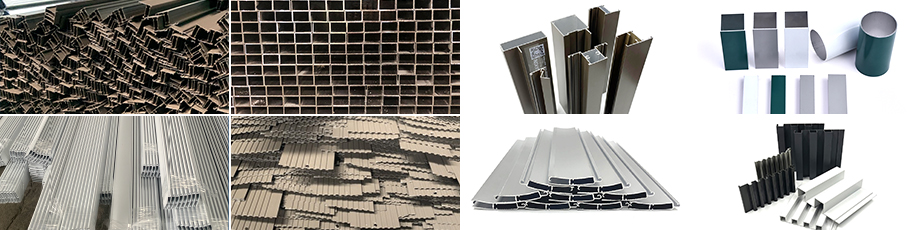
When buyers order aluminum roller shutter profiles, they usually compare the alloy, wall thickness, surface finish, and price.
However, extrusion tolerance is just as important.
Two profiles may use the same alloy and have the same nominal thickness. However, they may perform very differently after assembly. Small changes in size can affect how the slats connect, how smoothly they move inside the guide rails, and whether different production batches can be used together.
Poor tolerance control can also increase hidden costs. A wholesaler may receive profiles that are too heavy, difficult to assemble, or incompatible with earlier stock.
At the same time, buyers do not need the tightest tolerance on every dimension. Very tight tolerances can increase production costs without improving the final shutter.
The best approach is simple: control the dimensions that affect function, weight, and assembly.
An aluminum extrusion tolerance is the allowed difference between the size shown on the drawing and the actual size of the finished profile.
For example, a roller shutter drawing may include:
The extrusion process involves heat, pressure, cooling, stretching, and aging. These steps can create small dimensional changes.
A professional supplier should control these changes within an agreed range.
A wholesaler usually keeps profiles in stock and sells them to different fabricators or installers.
This business model requires stable product dimensions.
A wholesaler may place a repeat order several months after the first shipment. The new profiles should still match the remaining stock. If the interlock or guide rail size changes, the two batches may not work together.
Stable tolerances help wholesalers:
Wall thickness has a direct effect on the strength, weight, and cost of a profile.
However, buyers should not check only one thickness value.
A roller shutter slat may have different thicknesses around the cross-section. The curved wall, interlock, reinforcement rib, and flat surface may use different designs.
The buyer should confirm:
Weight per meter is especially important for wholesalers.
Many importers buy aluminum by kilogram but sell it by piece or by meter. If the profile is heavier than expected, the importer pays for extra aluminum. That extra weight may not improve the shutter’s performance.
If the profile is too light, the wall thickness may fall below the agreed level.
The buyer should control both wall thickness and weight per meter. This method provides better quality control and more accurate cost calculations.
The interlock connects one roller shutter slat to another.
This area directly affects assembly and operation.
If the interlock is too tight, workers may struggle to assemble the curtain. The shutter may also create more friction during operation.
If the interlock is too loose, the curtain may shake, create noise, or separate more easily.
The buyer should pay attention to:
The interlock is a critical functional area. It often needs tighter control than decorative or non-contact surfaces.
A profile can meet the required wall thickness and still perform poorly if the interlock is not stable.
The overall width of a slat is not always the same as its effective coverage.
Effective coverage means the actual height that one slat adds after it connects with another slat.
This measurement affects how many slats the fabricator needs for one shutter curtain.
If the effective coverage is smaller than expected, the fabricator may need an extra slat. That difference can increase the cost of every finished door.
Wholesalers should ask the supplier for:
These figures make it easier to compare products and calculate the real system cost.
The outside size of a guide rail is not always the most important measurement.
The internal channel is the area that controls the movement of the shutter curtain.
If the channel is too narrow, the curtain may jam. If the channel is too wide, the curtain may move from side to side and create noise.
The buyer should confirm:
The supplier should test the slat and guide rail together. A single profile may meet its drawing, but the full system may still have fitting problems.
Long roller shutter profiles need good straightness.
A profile with too much bow may be difficult to assemble. It may also move unevenly inside the guide rail.
Twist is another common issue. A twisted profile rotates slightly along its length.
Excessive twist can affect:
The supplier should inspect straightness and twist over the full profile length. A short sample cannot show every long-profile problem.
Cut length also affects the wholesaler’s cost.
If profiles are shorter than the agreed length, the buyer may lose resale value. Uneven lengths can also create problems during packing, storage, and fabrication.
The purchase order should state:
Buyers should avoid using only the words “standard length.” The order should always include a clear number.
Buyers do not need very tight tolerances on every part of the profile.
Tighter tolerances often require more die corrections, slower extrusion speeds, more inspections, and a higher rejection rate. These steps can increase both the price and the lead time.
The buyer should divide dimensions into three groups.
These dimensions affect assembly and operation.
They include:
The supplier should control these dimensions carefully.
These dimensions affect the buyer’s purchasing and resale costs.
They include:
The supplier should include these values in the quotation or quality agreement.
These dimensions do not directly affect operation, safety, or product cost.
Standard extrusion tolerances are usually enough for these areas.
This method helps the buyer avoid overpaying for unnecessary precision.
A clear purchase order can prevent many tolerance disputes.
The buyer should include:
The buyer should also explain whether the dimensions apply before or after powder coating or anodizing.
Surface treatment can change small fitting dimensions. This change matters most in interlocks, guide channels, and seal grooves.
The supplier should check the following items before shipment:
| Inspection Item | Main Check |
|---|---|
| Wall thickness | The supplier checks the agreed measuring points. |
| Weight per meter | The supplier compares the actual weight with the quotation. |
| Interlock | The supplier assembles several slats and checks their movement. |
| Effective coverage | The supplier measures the assembled slat width. |
| Guide rail opening | The supplier tests the guide rail with the matching slat. |
| Straightness | The supplier checks the full profile length. |
| Twist | The supplier checks rotation along the profile. |
| Cut length | The supplier confirms the minimum and maximum length. |
| Surface finish | The supplier checks the color, coating, and scratches. |
| Batch consistency | The supplier compares the order with the approved sample. |
A dimensional inspection alone is not enough.
The supplier should also carry out an assembly test. This test can reveal fitting problems that individual measurements may miss.
A specification such as “1.0 mm thickness” does not explain the tolerance or measuring point.
The price per kilogram does not show the real cost per meter or per finished shutter.
This approach can increase the price without improving performance.
Powder coating and anodizing can affect important fitting areas.
A short sample can show the cross-section, but it cannot fully show straightness or twist.
An approved sample gives both sides a clear standard for repeat orders.
Good tolerance control does not mean that every dimension must be extremely precise.
Wholesalers should focus on the dimensions that affect:
This approach helps buyers maintain stable quality without paying for unnecessary precision.